
The Strategic Guide to CRM De-coupling for 2026
Moving Beyond the Monolith: Why 2026 is the Year of CRM De-coupling
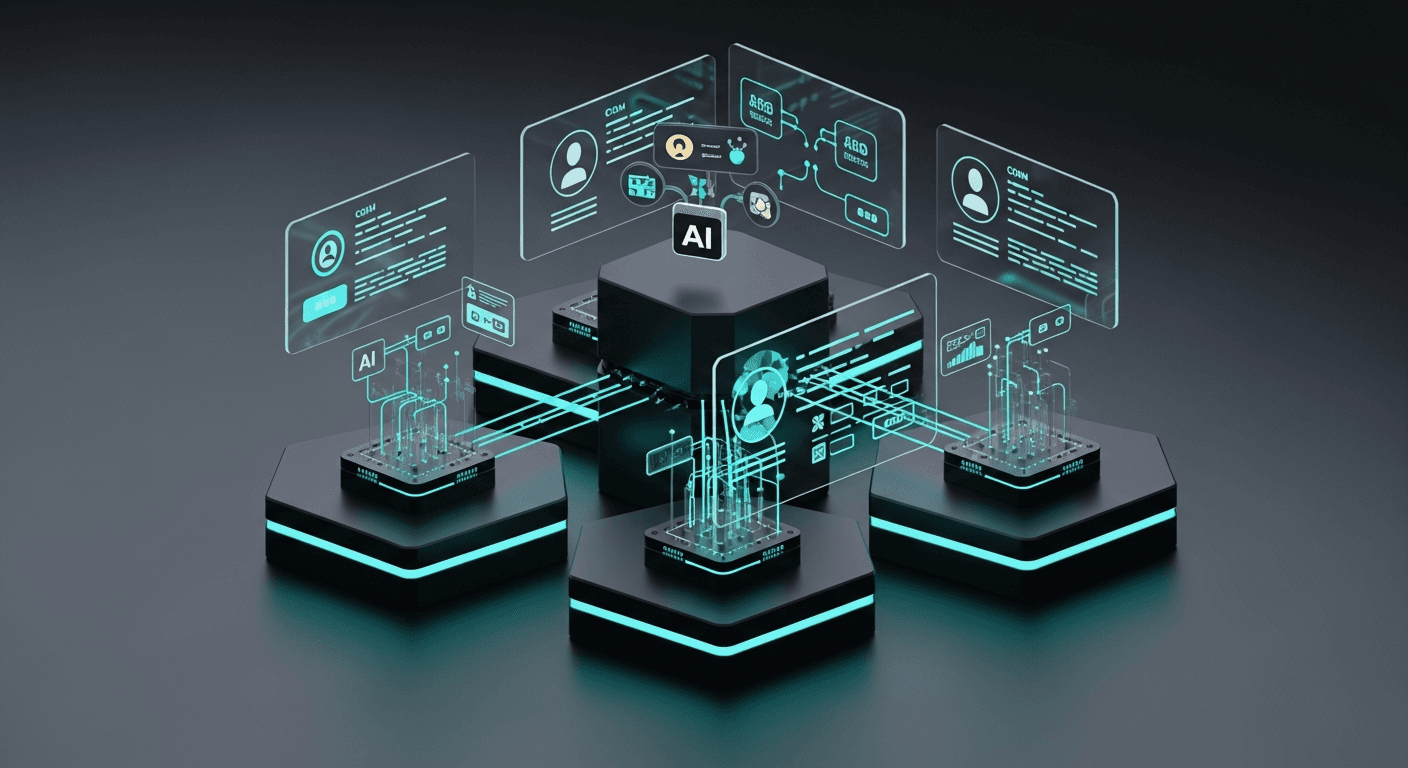
The promise of the "single source of truth" has largely become a bottleneck. For years, mid-market enterprises have been sold on the idea of the monolithic CRM—a massive, all-encompassing suite designed to handle every customer touchpoint. In practice, these rigid architectures often stifle the very innovation they were meant to facilitate. As we look toward 2026, the industry is shifting toward CRM de-coupling: the strategic separation of CRM functionalities into modular, AI-first ecosystems.
This isn't just a technical trend; it’s a survival strategy. A Gartner report from October 8, 2024, predicts that 70% of organizations will adopt de-coupled CRM architectures by 2026 to boost operational agility. For the mid-market, this transition is the most effective way to kill vendor lock-in and finally make use of edge AI and predictive analytics.
Why the Tipping Point is Now
Modularity is no longer optional. Traditional, tightly coupled systems simply cannot ingest or process the real-time data required for modern AI. The heavyweights already see the writing on the wall. On October 10, 2024, Salesforce announced new de-coupling features within its Einstein 1 Platform, allowing enterprises to plug AI into disparate systems rather than forcing everything into one box. Microsoft followed suit, updating Dynamics 365 with Copilot AI to prioritize real-time insights over static record-keeping.
The numbers back the move. Forrester research from September 2024 shows that 65% of enterprises plan to de-couple their CRM systems by 2026. The goal is scalability. While social media might joke about "dinosaur tech" versus a "nimble ninja" architecture, the financial reality is serious: firms moving toward composable architecture can reduce IT costs by 20-30%.
Strategic Freedom vs. The Reality of Integration Debt
Vala Afshar, Chief Digital Evangelist at Salesforce, describes de-coupling as "strategic freedom"—an environment where AI agents can operate without the friction of data silos. I agree, but with a caveat. Freedom requires discipline. Dion Hinchcliffe of Constellation Research offers a sobering perspective, warning that firms frequently underestimate "integration debt" by as much as 40%.
At Skewes AI, we don’t view de-coupling as a silver bullet. It is a tool to achieve measurable outcomes. If you don’t have the data readiness or process maturity to handle a modular stack, you’re just trading one set of problems for a more expensive, fragmented version.
The Intelligence Layer: Where the Value Lives
In a de-coupled environment, the database and the engagement layer live separately. This creates a massive opportunity to build a dedicated "intelligence layer." Instead of being limited by a legacy CRM’s user interface, you can build custom pipelines that turn raw data into actual strategy.
Our Data Intelligence approach focuses on three specific shifts:
- Raw Data Transformation: Turning fragmented touchpoints into a single, unified intelligence stream.
- Intelligence Layer Integration: Giving AI tools clean, real-time access without the lag of a monolithic UI.
- Actionable Insight Generation: Moving the boardroom away from anecdotal evidence toward data-backed decisions.
Precision Retention Through Modular AI
One of the most immediate wins of a de-coupled framework is specialized retention. Gartner forecasts that de-coupled CRMs will integrate AI in 75% of cases, which could drive a 15% increase in customer retention through better data flow.
When Customer Intelligence functions as a standalone module, you gain a level of precision that "all-in-one" suites can't touch. You can implement:
- Behavior Pattern Recognition: Spotting the subtle shifts in user behavior that signal churn before it happens.
- Churn Prediction Models: Using historical data to trigger automated interventions for at-risk accounts.
- Advanced Segmentation: Moving past basic demographics into RFM (Recency, Frequency, Monetary) and lifecycle-based targeting.
Managing the Risk: Privacy and Governance
Modularity does introduce complexity, specifically in security. A Wired article from October 7, 2024, noted a 25% rise in CRM-related breaches in modular setups. If you don't manage the "connective tissue" between your modules, you’re opening doors for vulnerabilities.
However, the risk is manageable. A McKinsey study suggests that de-coupled systems with proper AI governance can actually improve compliance by 35%. The fix is Custom AI Solutions—bespoke algorithms and software engineering designed for your specific security needs. This ensures that as data moves between modules, it stays protected by modern encryption and ethical protocols.
The 2026 Roadmap: Pragmatism Over Hype
For a mid-market leader, success in 2026 won't be defined by the complexity of your tech stack, but by its functionality. You need a roadmap built on clear KPIs.
Our AI Strategy & Consulting focuses on the "how":
- Data Readiness Assessment: Can your current architecture actually support a de-coupled model?
- Process Maturity Evaluation: Which tasks are ready for automation, and which are still broken?
- ROI Potential Analysis: We target the 20-30% IT cost reduction cited by Forrester.
By layering in Predictive Analytics, you can finally connect historical data to future demand. This allows your supply chain and financial planning to talk directly to your CRM ecosystem, ending the era of siloed operations.
Unlock Your Data Intelligence
The transition to de-coupled CRM architecture is inevitable. The benefits—reduced vendor lock-in, lower costs, and hyper-personalized customer experiences—are too significant to ignore. But you need a partner who understands the difference between a modular dream and operational reality.
Skewes AI builds the pragmatic bridges between where your data is and where it needs to be. We help mid-market enterprises cut through the complexity of AI adoption to find the growth underneath.
Unlock Your Data Intelligence. Schedule a consultation with Skewes AI today to build your roadmap for 2026.
#PracticalAI #EnterpriseGrowth #DataIntelligence #MidMarketTech #CRMDecoupling #FutureOfCRM